
How to get rid of spider mites
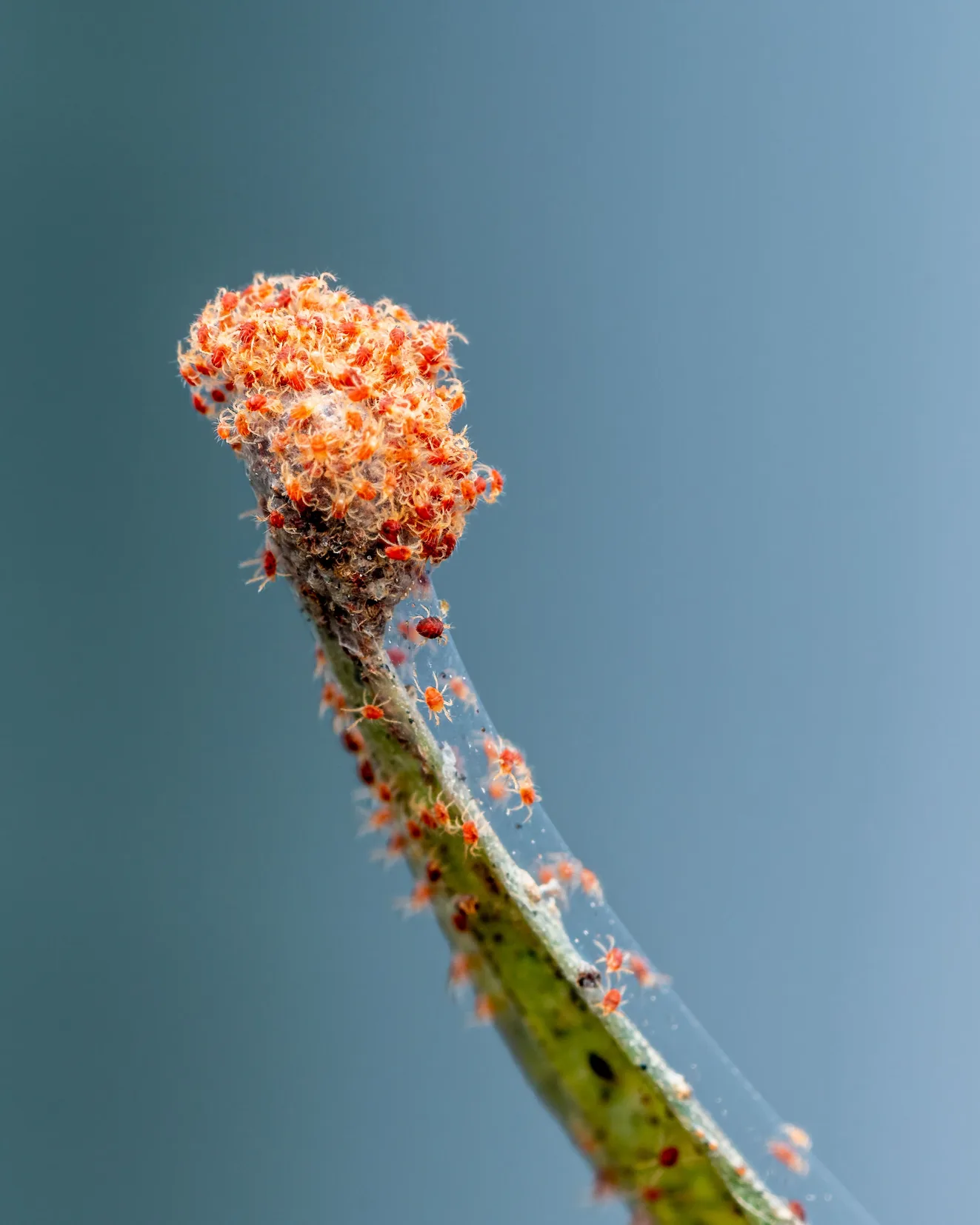
Your leaves have gone pale and speckled, and there's fine webbing underneath. That's spider mites, and if you can see them, you need to act fast.
Here's how to get rid of spider mites and take your plants back, whether they're houseplants, greenhouse crops, a grow room or the garden.
In the UK most people call them red spider mite. They're up to a millimetre long, they hide on the undersides of leaves, and they breed fastest in warm, dry conditions. That's why they're such a problem on houseplants and in greenhouses.
- Isolate the plant so the mites don't spread to the rest.
- Rinse the leaves with water, especially the undersides.
- Spray every leaf, top and underneath, with SMC. It smothers the mites and their eggs in a fine, plant-based film.
- Check again after four days. If any survived, spray again.
What are spider mites?
Before you spray, know what you're fighting.
Spider mites are tiny pests that live on the undersides of leaves. Adults and young mites both pierce the leaf and feed on the contents of the plant's cells.
The one that plagues houseplants and greenhouse plants is the glasshouse red spider mite, also called the two-spotted spider mite (Tetranychus urticae). It feeds on so many plants that few are completely immune.
What do spider mites look like?
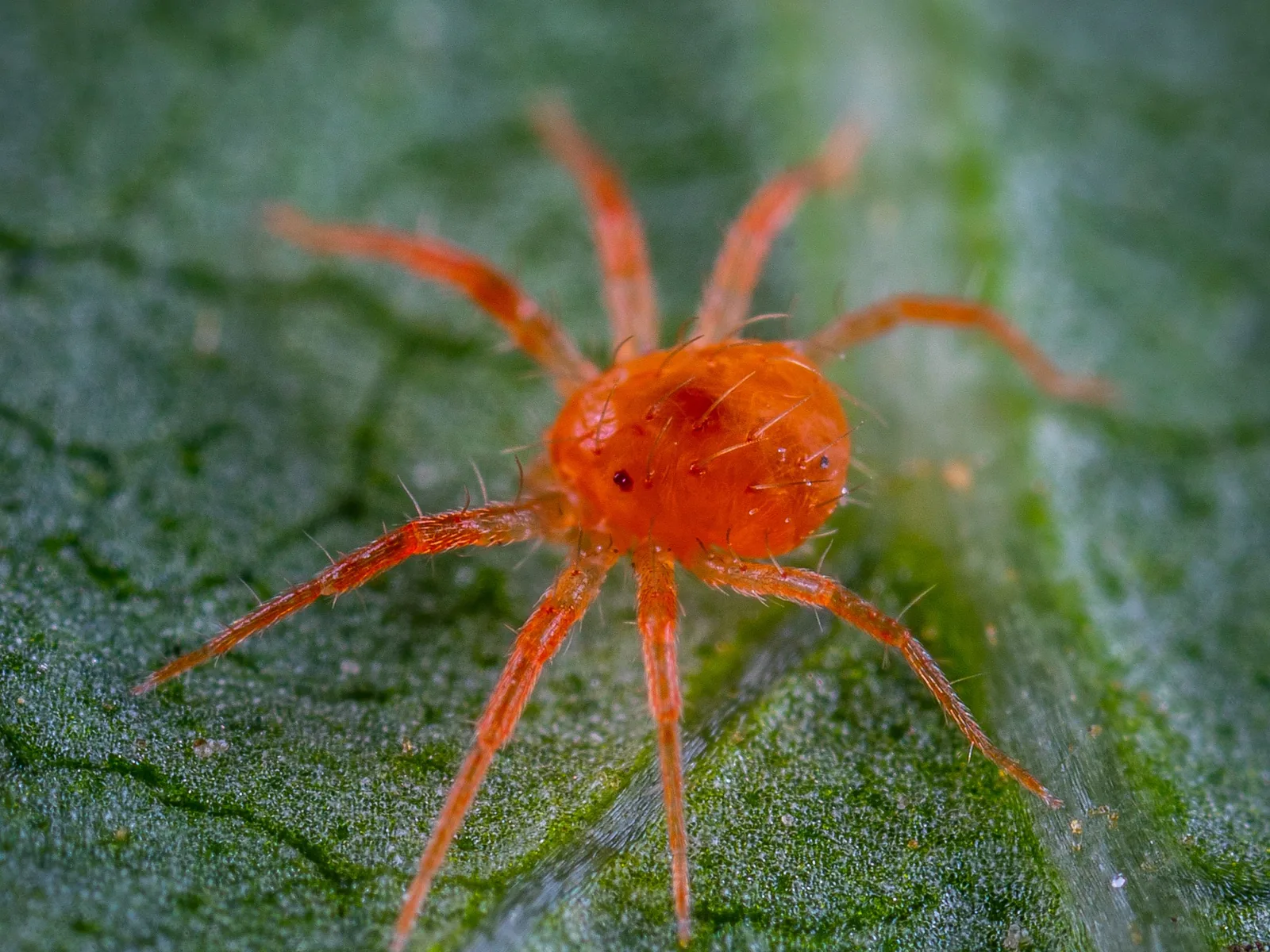
Each mite is up to a millimetre long. You'll only see them with the naked eye once there are lots of them.
Despite the name, they're yellowish-green in spring and summer, with a pair of dark markings that give the two-spotted spider mite its name. In autumn and winter they turn orange-red. They also go red when a plant is so badly damaged it can no longer feed them.
Turn a leaf over to find them. They gather on the underside with their eggs and the white skins they shed.
Spider mite eggs
The eggs are tiny spheres, laid on the undersides of leaves. They're the next wave.
At 21°C a mite goes from egg to adult in about 12 days. At 10°C the same cycle takes around 55 days. That's why a warm greenhouse or living room can go from a few mites to serious damage so quickly.
SMC's film coats the unhatched eggs too, the stage most chemical sprays miss!
Early signs of spider mites
Spider mites hide under the leaf, but the damage shows on top first. Spot them early and the fight is far easier.
The early signs of spider mites to look for:
- Fine, pale speckling on the top of the leaves
- Dust on the underside of the leaf that moves
- White flecks under the leaf: the skins and empty egg shells they leave behind
- Fine webbing, once their numbers build up
Spider mite damage on leaves
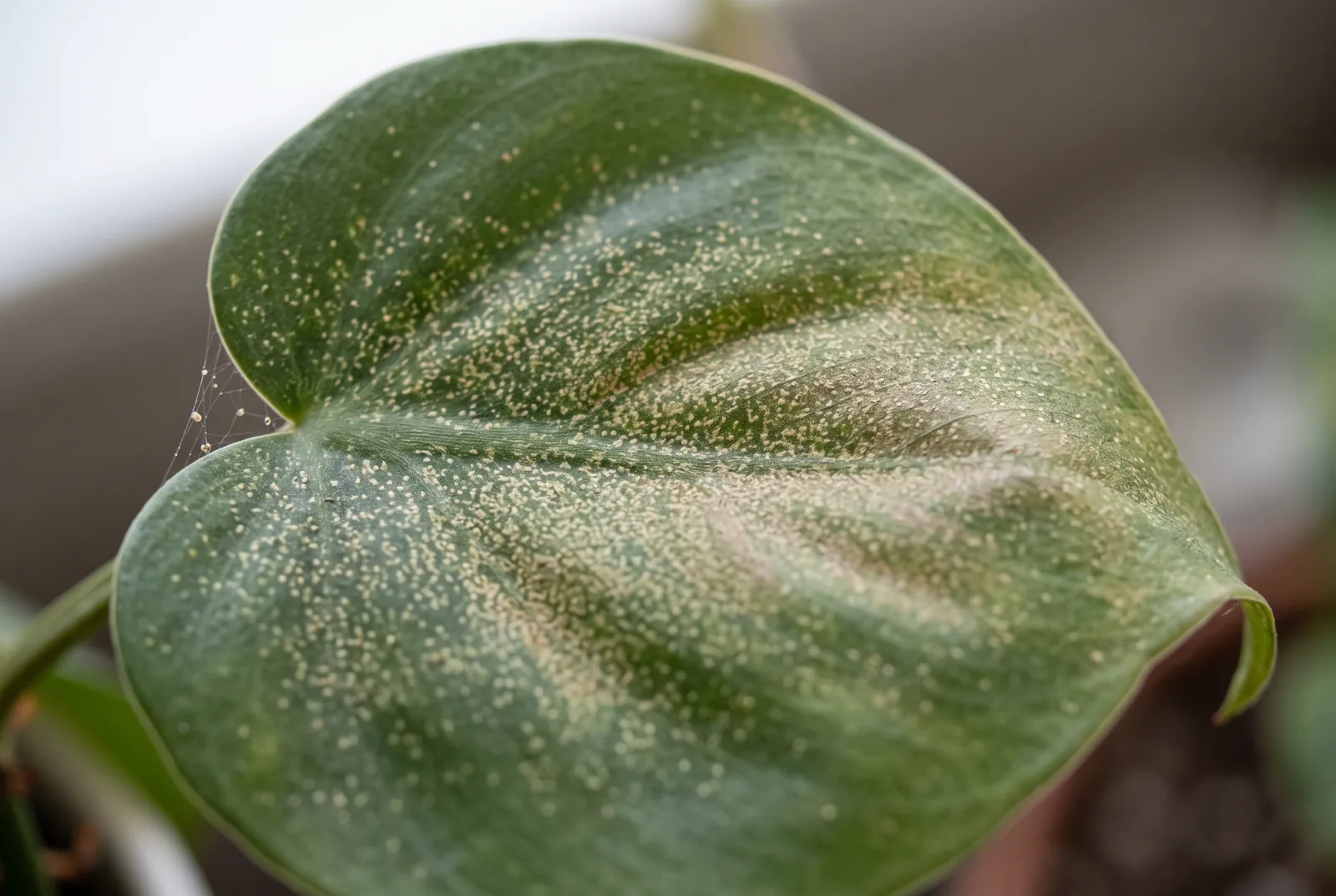
That pale speckling is the damage from their feeding. As the attack goes on, leaves lose most of their green, dry up and drop. A heavily damaged plant can be badly weakened, and it may die.
The damage builds fastest in warm, dry conditions. Indoors and under glass they're most active from March to October, and in a heated greenhouse they can do damage outside those months too. Outdoors, they strike in hot, dry summers.
Spider mite webbing
Fine silk webbing is the sign of a heavy attack. By the time you see it, the mites have the upper hand, so isolate the plant and start treating straight away.
How to get rid of spider mites, step by step
Four steps to kill spider mites and keep control of them. They're the same for a single houseplant or a whole greenhouse.
1. Isolate the plant
Move the infested plant away from the rest. Then check the plants that were next to it, under the leaves first, because they're the next target.
2. Rinse the leaves
Rinse the leaves with water in the sink or shower, or with a gentle hose outside. Concentrate on the undersides. This washes off loose mites and breaks up the webbing, but water alone won't clear an infestation.
3. Spray every leaf, top and underneath
Now go after the ones that are left. SMC is a UK-made spider mite treatment that kills physically: the film seals the mites' breathing pores and they suffocate. Its active ingredients are 100% plant-based, so it's a natural way to get rid of spider mites, with no pesticide ingredients and nothing for them to build resistance to.
The film works only where it lands, so cover every leaf, top and underneath. Spray out of direct sunlight.
It's safe around children, pets and bees, and there's no harvest interval. Spray today, pick today.
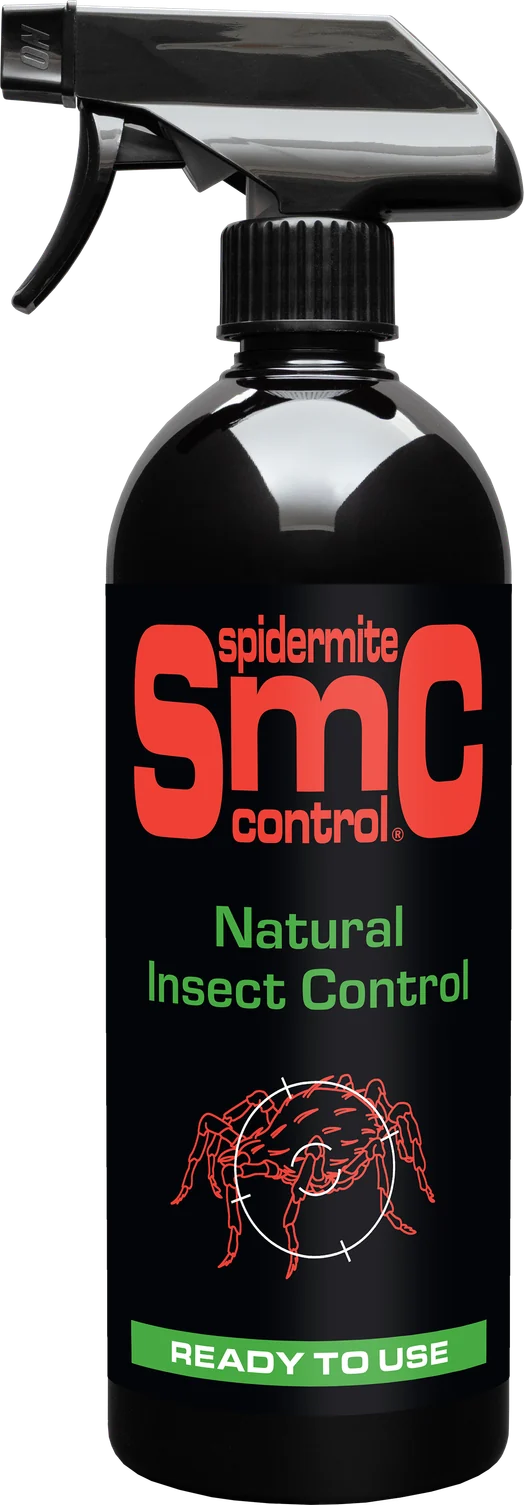
- Kills spider mites and their eggs
- Safe around children, pets and bees
- Spray today, pick today
- Made in the UK
750ml Ready to Use. No mixing. Spray at the first sign.
Buy on Amazon4. Repeat to catch the eggs
Check the plant again after four days, under the leaves first. If you still see live mites, spray again to finish off the survivors and any that have hatched since.
Spider mites on houseplants and indoor plants
Spider mites often arrive in the house on a new plant, hidden under the leaves. Once they're in, a warm room with dry air suits them, and with the heating on they're not just a summer problem.
To get rid of spider mites on houseplants, use the four steps above. The sink or shower makes the rinse easy. SMC is safe around children and pets, which matters when the plant lives on the kitchen windowsill.
Check every plant in the room while you're at it, including the healthy-looking ones. To stop them coming back, follow the prevention steps further down.
Spider mites in greenhouses, grow rooms and gardens
In a greenhouse or grow room
A hot, dry greenhouse or grow room with the plants packed close together is where greenhouse red spider mite does its worst damage.
Treat with the four steps above. For a whole greenhouse or grow room, the 300ml concentrate makes 12 litres of spray. There's no harvest interval, so mites that turn up during flowering or close to picking can be treated straight away. Spray today, pick today.
After harvest, clear out their hiding places. Mature females see out the winter in cracks and crevices: frames, canes, stakes, soil and old plant debris. Take out the debris, old canes, stakes and ties, clean the empty space with a greenhouse disinfectant, and keep weeds down in and around it.
In the garden
In the garden, spider mites are a summer pest, and a long, hot, dry spell gives them the advantage.
To get rid of spider mites in the garden, spray in the evening or on a dull day, out of direct sunlight, and cover the undersides of the leaves. Hosing the leaves helps too, although water alone won't control them. SMC is safe around children, bees and pets.
Which plants do spider mites attack?
Almost anything green. Few plants are completely immune, but these are among their favourites:
- Greenhouse crops: tomatoes, cucumbers, peppers and aubergines
- Fruit: grapevines, peaches and nectarines
- Flowers and houseplants: roses, orchids, fuchsias, pelargoniums, busy Lizzies and poinsettias
- Herbs, especially mint
If you grow any of these, they're in the firing line from March to October!
Why chemical sprays stop working
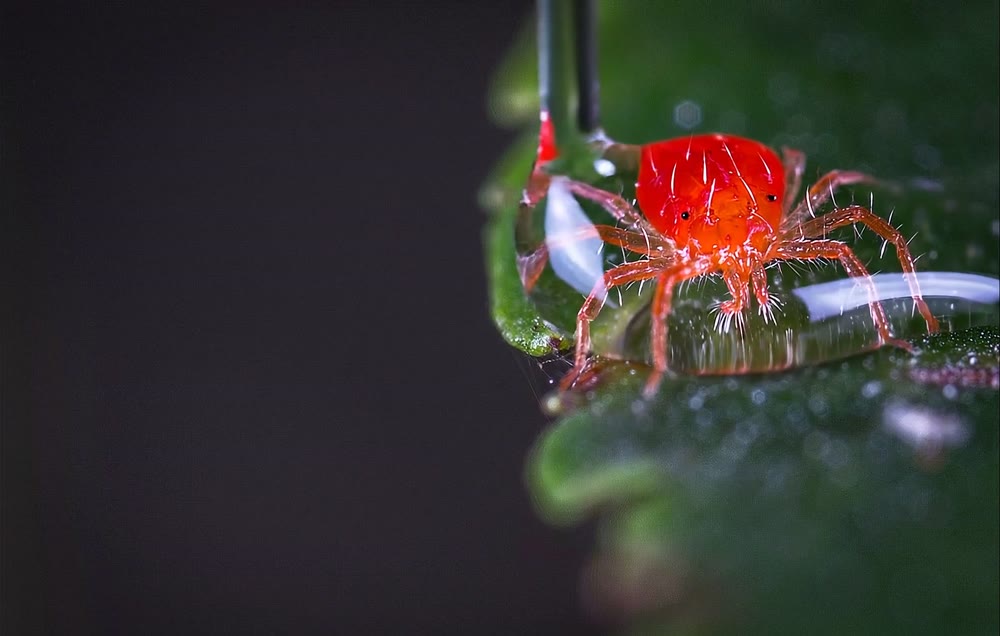
Spider mites have a reputation as one of the most chemical-resistant pests there is.
They breed fast and lay plenty of eggs. Spray the same chemical again and again, and the few mites that survive breed the next generation, which is harder to kill. Every survivor makes the next army stronger.
That's the problem with chemical control of red spider mite. A 2021 scientific review found they've become resistant to most of the chemical sprays made to control them.
SMC works physically. The film seals their breathing pores and they suffocate, so there's nothing for them to build resistance to.
How to prevent spider mites
Once you've cleared them, hold the line. To stop spider mites coming back on houseplants, in the greenhouse or in a grow room:
- Check new plants under the leaves before they join the others, and keep them apart for a while if you can.
- Look under the leaves often, so you catch them at the speckling stage.
- Mist houseplants regularly. Damp air works against spider mites, although misting alone won't control them.
- In a greenhouse or grow room, keep the humidity up and give plants room. Hot, dry, crowded conditions are exactly what they like.
- Clear dead leaves and debris from pots, trays and benches, and clean down between crops.
- Spray SMC weekly. There are no restrictions on how often you can use it, so regular spraying helps stop an outbreak before it starts.
Spider mite FAQs
What is the fastest way to get rid of spider mites?
Act as soon as you see pale speckling on the leaves. Isolate the plant, rinse the leaves, then spray every leaf, top and underneath, with SMC. If you still see mites after four days, spray again.
Can you just wash off spider mites?
Rinsing washes off loose mites and webbing, and damp air works against them, but water alone won't control an infestation. Rinse first, then spray.
Will spider mites eventually go away?
Not on their own. In warm, dry conditions they keep breeding from March to October, and they survive the winter to start again in spring. Left alone, a heavy attack can badly weaken a plant, and it may die.
Will spider mites infest your house?
Spider mites feed on plants, so it's your houseplants they infest. They can spread from one plant to the next, so check every plant in the room and keep new plants apart for a while.
Where do spider mites come from?
Indoors, they often arrive on a new plant. In greenhouses, mature females spend the winter in cracks, canes, soil and plant debris, then come out from late March. Weeds in and around the greenhouse can host them too.
Do spider mites bite humans?
No. Spider mites are plant feeders. They pierce plant cells and feed on what's inside.
Do spider mites live in soil?
They live and feed on the leaves, mostly on the undersides. Over winter, though, mature females can shelter in soil and plant debris, so clear debris and clean down between crops.
How long do spider mite eggs take to hatch?
Anywhere from 3 to 19 days, depending on temperature. Above about 21°C they can hatch in 3 to 7 days. That's why, if you still see mites four days after spraying, it's worth spraying again.