
How to get rid of mealybugs
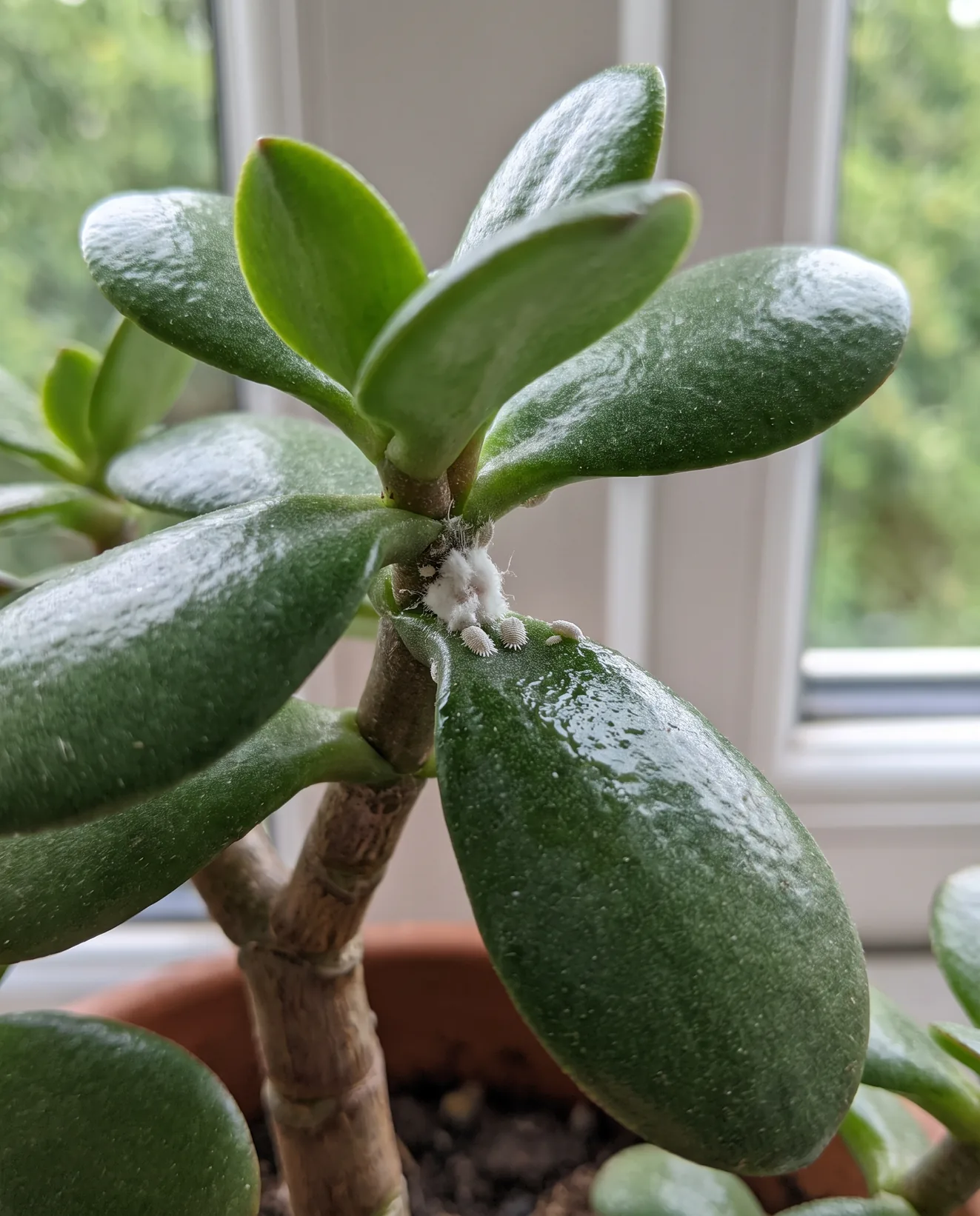
You spot a tuft of white fluff where a leaf meets the stem. Then another, wedged between two stems. The leaves below it feel sticky. Those are mealybugs, and the fluff is their cover.
To learn how to get rid of mealybugs, start by finding them. They dig into the tightest corners of a plant, and indoors they breed all year.
The short version: isolate the plant, hunt down every white tuft, spray SMC straight into the crevices, and check again after four days.
Where mealybugs hide
Mealybugs crawl slowly and settle in sheltered spots, where a spray struggles to land. Check:
- Leaf joints
- Leaf sheaths
- Between twining stems
- Under loose bark
- The undersides of leaves and along the flower stems
- The outside of the pot
Signs of a mealybug infestation
- Fluffy white wax in the leaf joints, usually the first sign
- Sticky leaves and stems, coated in their honeydew
- Black sooty mould on the sticky patches
- Yellowing leaves
- Stunted growth
Mealybug damage
A heavy mealybug infestation drains the plant's strength, stunts its growth and can make the leaves drop early. Left long enough, it can kill the plant.
What are mealybugs?
Scrape the fluff aside and you'll find the culprit: a soft, sap-sucking insect related to scale insects. In the UK they live mostly in greenhouses and on houseplants.
They feed on sap and pass what they don't use as honeydew. This sticky sugar coats the leaves below, and a black sooty mould grows on it.
What do mealybugs look like?
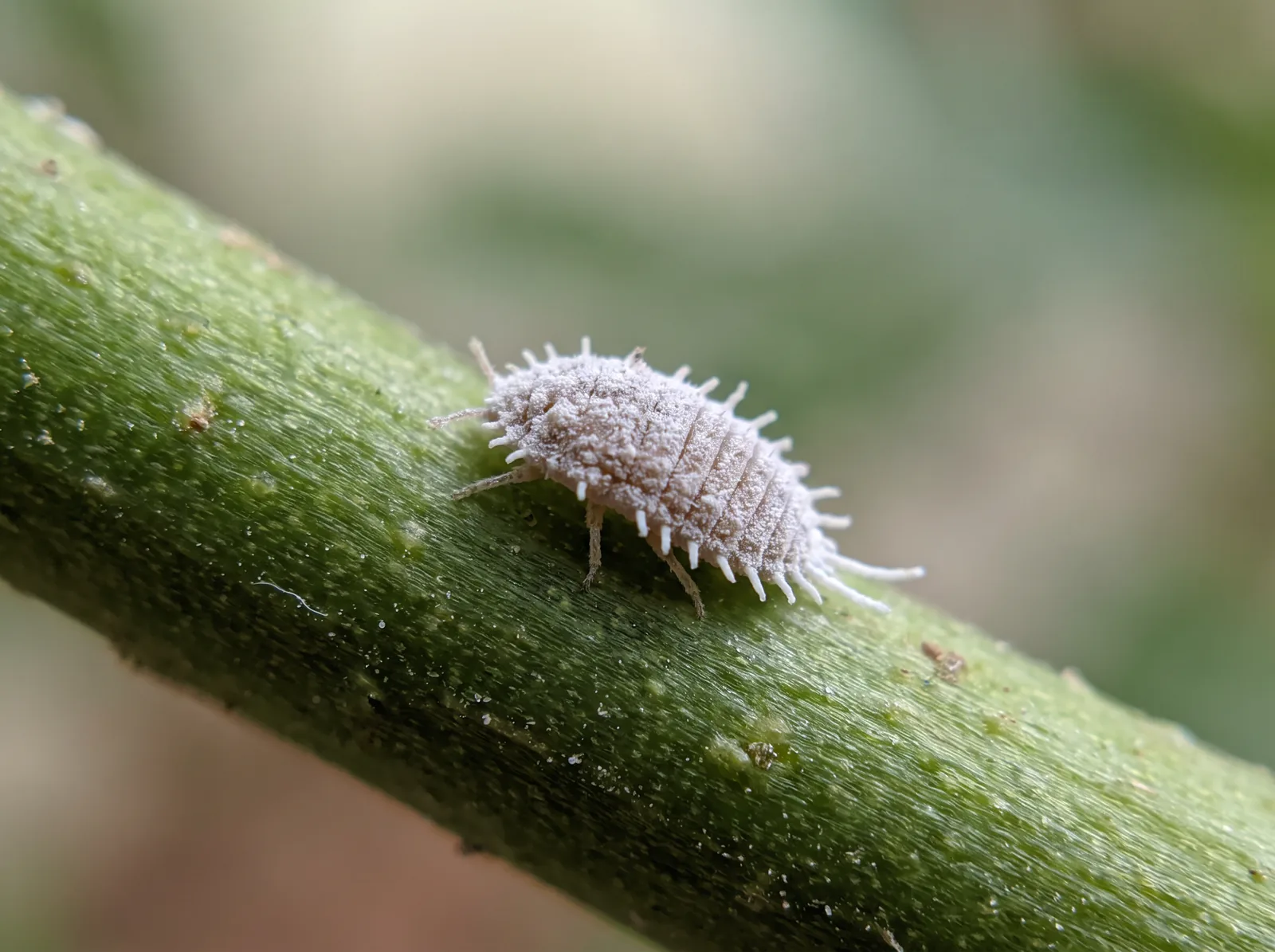
The adult female is a flat, soft oval up to 4mm long, coated in white powdery wax with waxy threads around the edge. Some are pink underneath, but the wax makes them look white. They live in clusters, so you'll usually spot the fluff before a single mealybug.
Mealybug eggs and life cycle
Females lay their eggs under a coat of white wax, which gives a colony its cottony look. The young look like small adults, and in mid-summer they can grow up in about a month.
Some species are all female. Others have small winged males, but you'll rarely see one.
How to get rid of mealybugs, step by step
Getting rid of mealybugs on plants takes reach. They're hard to control, and they shelter where sprays struggle to land, so every step below is about getting to them.
1. Isolate the plant
Move it away from your other plants. Adult females can't fly and don't crawl far, so mealybugs mostly spread on the plants themselves. Give the neighbours a once-over too.
2. Find every colony
Take the plant into good light and turn it slowly. Check the leaf joints, sheaths and stems, the undersides of the leaves and the outside of the pot. A tuft you miss is a colony that survives.
3. Spray into the crevices
Shake the bottle and spray with a fine mist, straight onto the mealybugs and over both sides of the leaves. Work the spray into the leaf joints and between the stems. SMC has to touch a mealybug to work, so take your time over the crevices.
Spray in the afternoon or evening, out of direct sunlight, and keep it off the flowers. Indoors, switch grow lamps off first.
SMC is a plant-based mealybug spray. Its oil film coats the mealybugs and blocks their breathing holes, so they suffocate. The same film coats their eggs before they hatch, and a later four-day check picks up any young that get through.
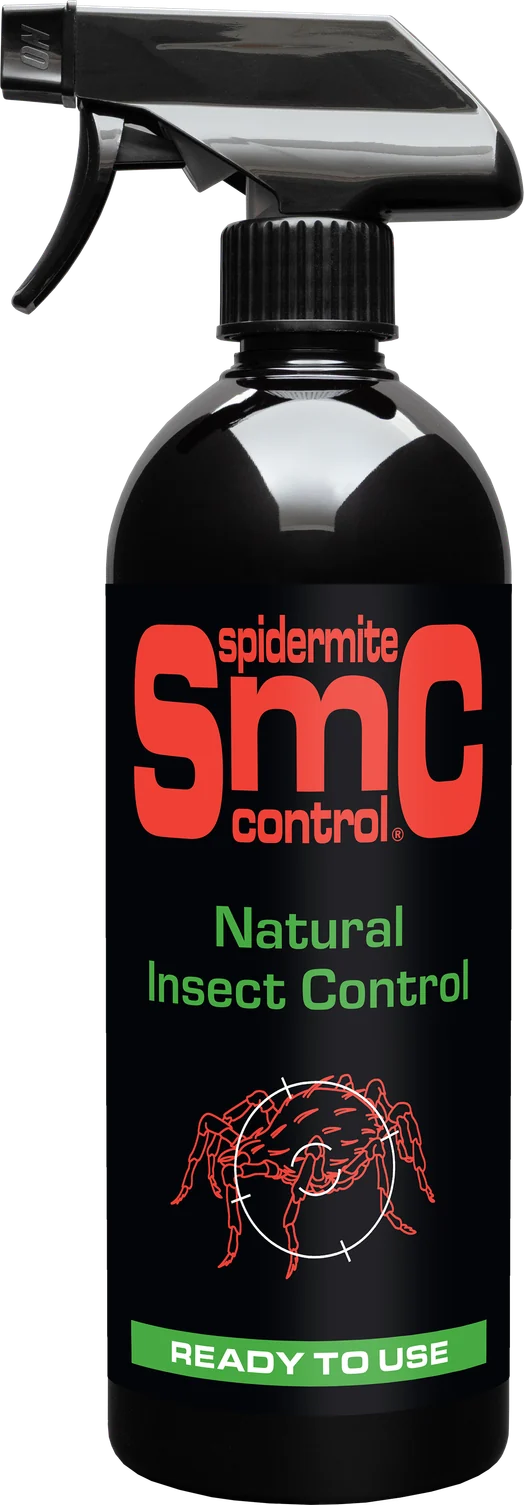
- Coats and suffocates mealybugs
- Coats eggs before they hatch
- Safe around children, pets and bees
- No harvest interval
750ml Ready to Use. Ready to spray, straight into the crevices.
Buy on Amazon4. Check after four days
Go back over the plant after four days, hiding places first. If you find live mealybugs, spray again. They usually take more than one round, so keep checking.
Choosing a mealybug spray
You've found them wedged in the leaf joints. A mealybug killer has to get in there after them, and it has to be safe wherever the plant lives.
SMC suffocates mealybugs with a plant-based film. Because the action is physical, they can't build resistance to it. Its active ingredients are 100% plant-based, and it's safe around children, pets and bees, which counts when the plant shares your living room!
To kill mealybugs on something like citrus, tomatoes, or grape vines, there's no harvest interval to wait out. You can pick the same day you spray.
One bottle also covers spider mites, greenfly, whitefly, aphids, and other soft-bodied pests.
Mealybugs on houseplants and indoor plants
Indoors, mealybugs breed all year. Most come home hidden on a new plant.
On houseplants they go for any number of plants, including cacti, succulents, moth orchids, and hoya. To get rid of mealybugs on houseplants, work through the four steps, then go round every other plant in the room or that was nearby.
Mealybugs on orchids
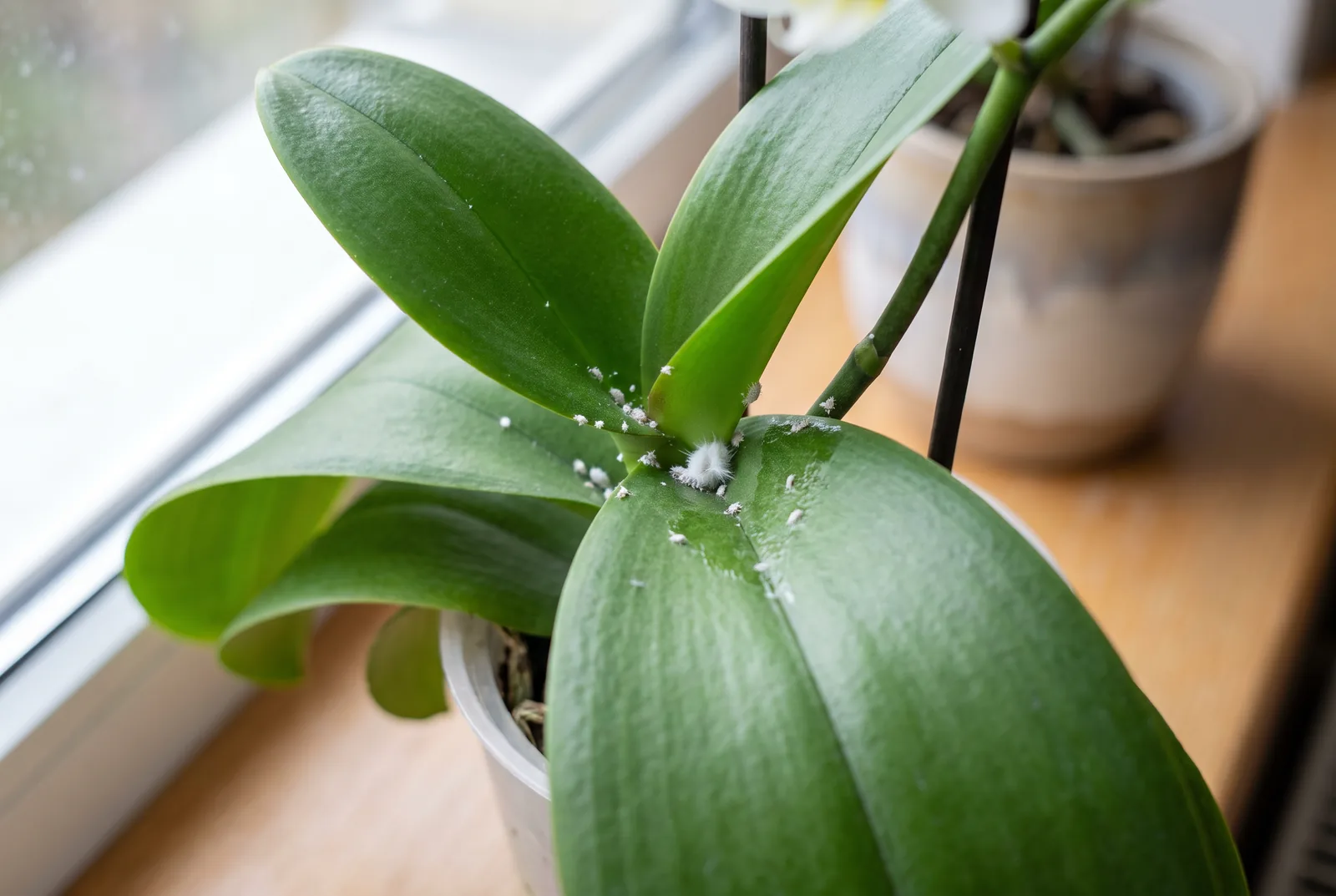
Moth orchids (Phalaenopsis) are a regular target. Mealybugs tuck into the leaf joints and along the flower stems. For orchids, mix the SMC concentrate weaker, at 8ml per litre of water instead of 25ml, and keep the spray off the flowers.
Mealybugs on cactus, succulents and jade plants
Cacti and succulents are a particular favourite, jade plants included. Patch-test a small area first and check the plant doesn't react before you spray the rest. Leave hairy-leaved plants out altogether.
Mealybugs in greenhouses and gardens
In the greenhouse
In a greenhouse, mealybugs keep breeding through winter, only slower. Grape vines, peaches, tomatoes, citrus and passion flowers are all on their list amongst nearly everything else.
For a greenhouse full of plants, the 300ml concentrate makes 12 litres of spray. Once you've treated, clear out dead leaves and prunings.
Mealybugs on outdoor plants
Outdoors, mealybugs are less common. When they do turn up, look on shrubs like ceanothus and laburnum, and on redcurrants.
How to stop mealybugs coming back
The plant's clear. The next job is to keep them out.
- Inspect new plants the day they arrive, consider keeping them in quarantine for some time.
- Look in the leaf joints and sheaths whenever you water.
- Clear dead leaves and prunings from around your plants and out of the greenhouse.
- Make SMC a weekly spray. You can use it as often as you like.
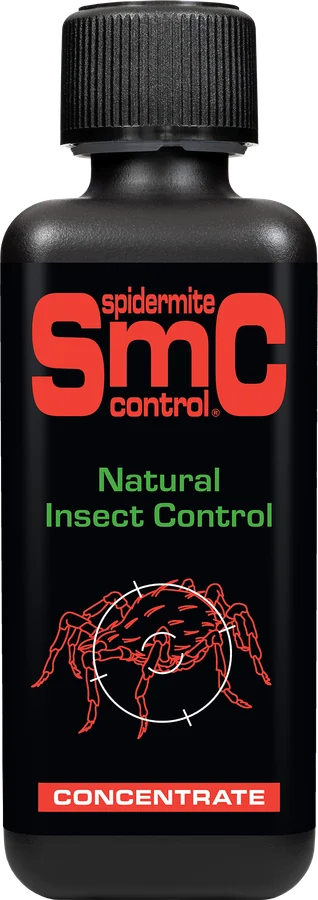
- Weekly spray, no limit on use
- Nothing for pests to resist
- 100% plant-based active ingredients
- Safe around children, pets and bees
300ml Concentrate. One bottle makes 12 litres of spray.
Buy on AmazonKeeping mealybugs in check
Mealybugs survive by hiding, so most of the work is finding them. Hunt down every white tuft, spray straight into the crevices, and go back after four days for the survivors. Then quarantine new plants and check the leaf joints when you water, so you catch the next colony early.
Mealybug FAQs
What causes mealybugs?
Most come from a new plant, bought or given, with mealybugs already on board. Once they're indoors, warmth lets them breed all year.
Do mealybugs fly?
The females can't. Some species have small winged males, but you'll rarely see one.
Are mealybugs harmful to humans?
No. Mealybugs are sap feeders, and they live on plants.
What kills mealybugs?
A spray that reaches them. SMC coats mealybugs in a thin plant-based film that blocks their breathing holes, and they suffocate. Spray into the crevices, check after four days, and spray again if any survived.
How do you get rid of mealybugs permanently?
Clear the plant, then keep them out. Quarantine new plants for a month, check the leaf joints and sheaths whenever you water, and make SMC a weekly spray. You can use it as often as you like.