
How to get rid of whitefly
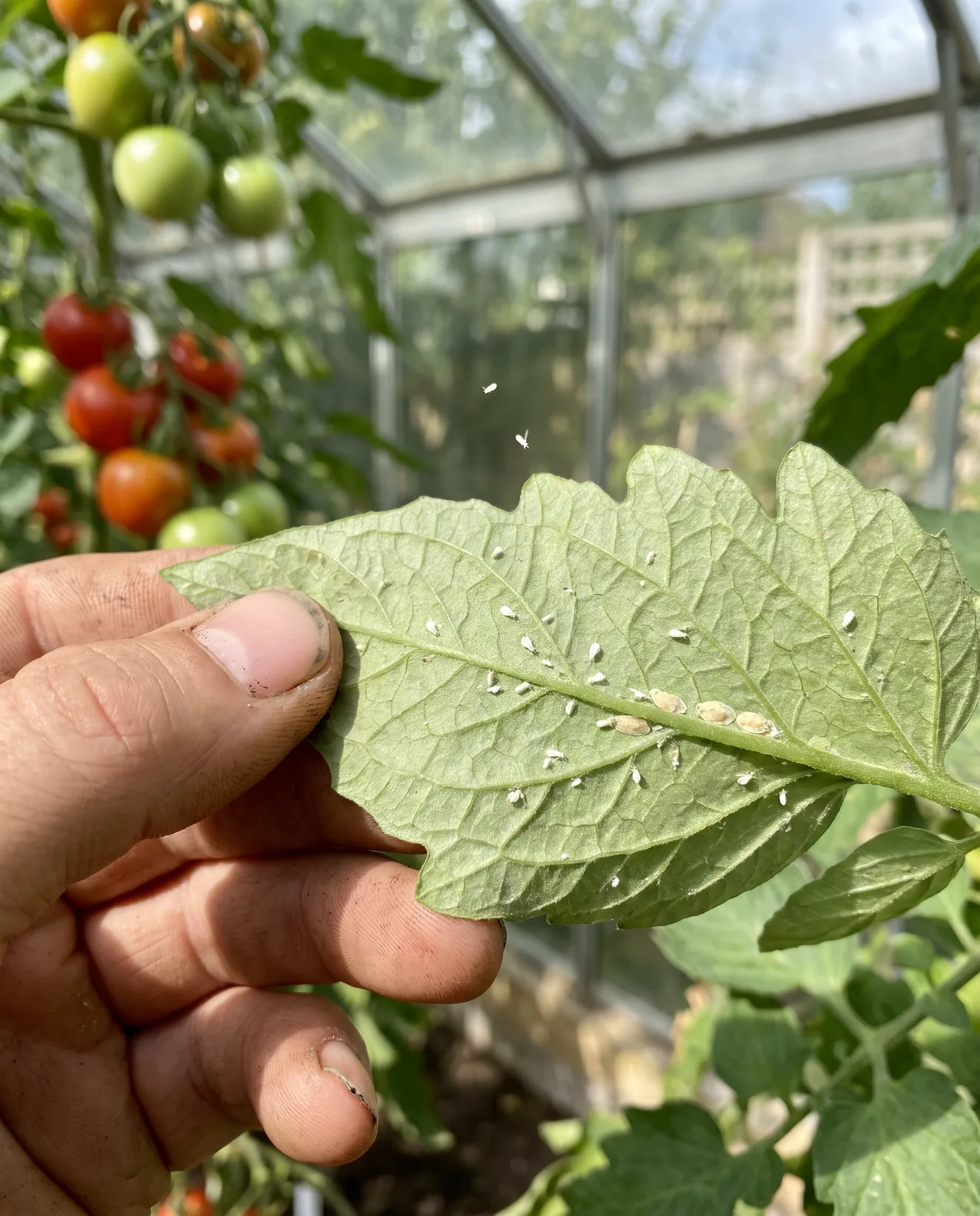
How to get rid of whitefly starts with, quite simply, turning a leaf over!
The little whiteflies that lift off in a cloud when you brush the plant are the adults. Underneath the leaves sit their eggs and their young, stuck flat to the surface and feeding. That's where the next wave is coming from, and it's where your spray needs to land.
To get rid of whiteflies on plants, spray SMC under the leaves, where every stage sits, and turn them over again four days later.
What is whitefly?
Whitefly are small sap-sucking insects, and the UK has several species. Glasshouse whitefly, also called greenhouse whitefly, lives in greenhouses and on houseplants. Cabbage whitefly lives outdoors on brassicas. They're different species: cabbage whitefly only feeds on brassicas, and glasshouse whitefly leaves brassicas alone outdoors.
What does whitefly look like?
Adult whitefly are about 1.5mm long, with white wings. Disturb the plant and they fly up from the undersides of the leaves in a cloud.
White specks on the tops of the leaves are a different enemy. Those are probably the shed skins of aphids, a sign of greenfly.
Whitefly eggs and young
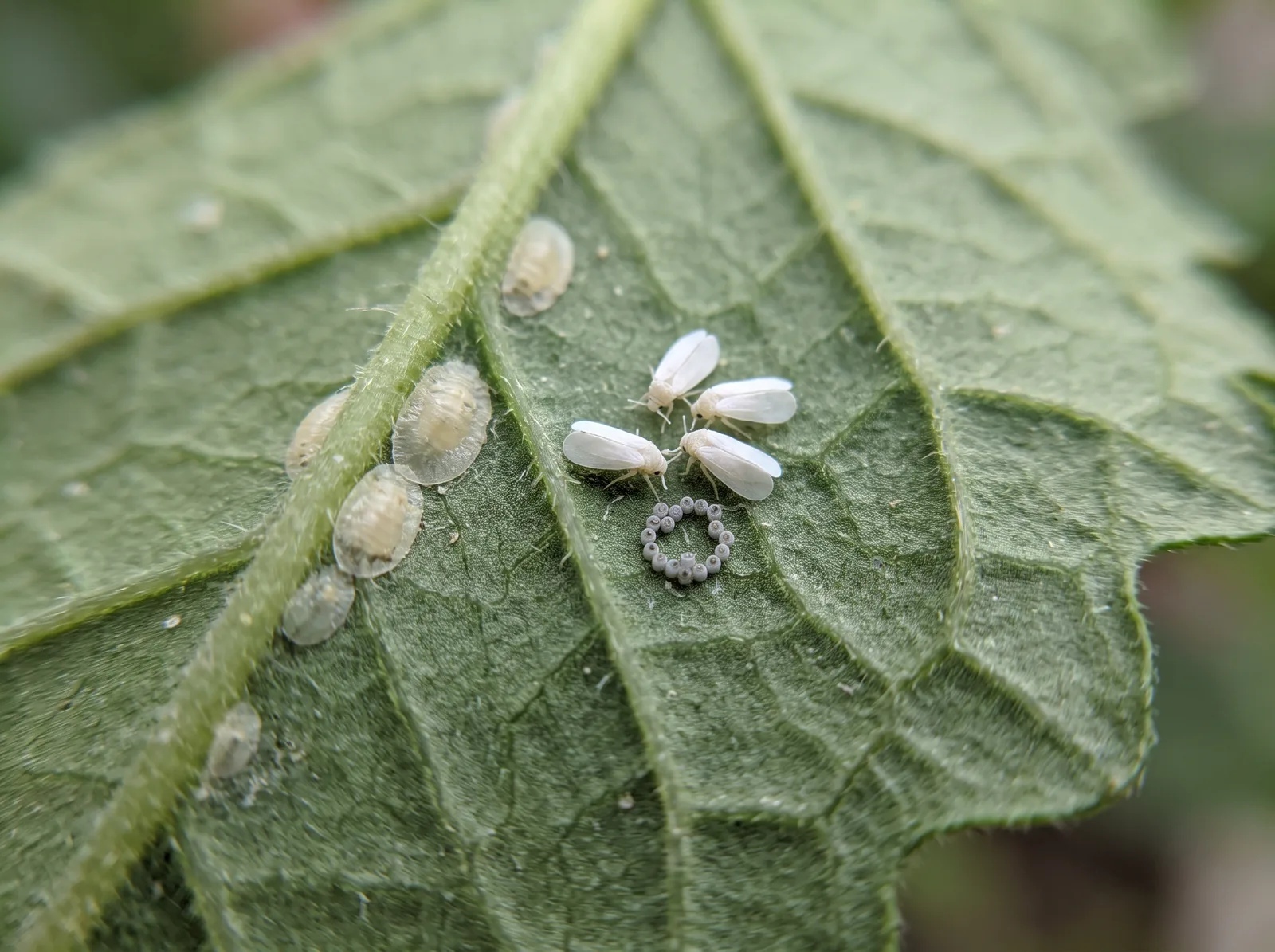
A female whitefly can lay more than 200 eggs. She lays them on the underside of the leaf, one at a time or in circles: tiny greyish-white cylinders.
The young hatch as crawlers, move about for several hours, then settle and stay put. Flat, oval and creamy white, they look like tiny scales, and they feed on the leaf until they become adults. Dug in under the leaf, they stay out of sight from above.
Whitefly life cycle
Warmth sets the pace. At 21°C, the glasshouse whitefly life cycle takes about three weeks. At 10°C, it takes several months. In a greenhouse or on a houseplant, they're active all year round.
Signs of a whitefly infestation
Look for these, on top of the leaves and underneath:
- A cloud of tiny white flies when you brush the plant
- Eggs and flat, pale young on the undersides of the leaves
- Sticky honeydew on the leaves, stems and fruit
- Black sooty mould on the leaves and fruit
- Yellowing leaves, or leaves that dry out and drop
What does whitefly damage look like?
Adults and young both suck sap, which weakens the plant. A heavy infestation can turn leaves yellow or dry, and some drop off. The honeydew they leave behind feeds black sooty mould, which spreads over leaves and fruit. Some whitefly species also carry viruses that infect certain vegetable crops.
How to get rid of whitefly, step by step
Whitefly treatment and control come down to coverage. Eggs, young and adults all sit on the underside of the leaf, so that's where the spray has to go.
1. Start at the bottom
Turn the leaves over, lowest leaves first. Those are usually the worst hit and the hardest to reach. Then work up the plant and over the plants around it.
2. Spray the undersides
Shake the bottle, then mist SMC straight onto the whitefly and over both sides of every leaf, undersides first. Keep it off the flowers. Spray in the afternoon or evening, when pests are less active, and out of direct sunlight.
SMC is a plant-based whitefly spray that works on all three stages under the leaf. The adults and young it lands on suffocate under its oil film, and the eggs are coated before they hatch. It's a non-chemical method with 100% plant-based active ingredients and no pesticides. It's an aphid and whitefly spray in one bottle, and it also covers spider mites, mealybugs and other soft-bodied pests.
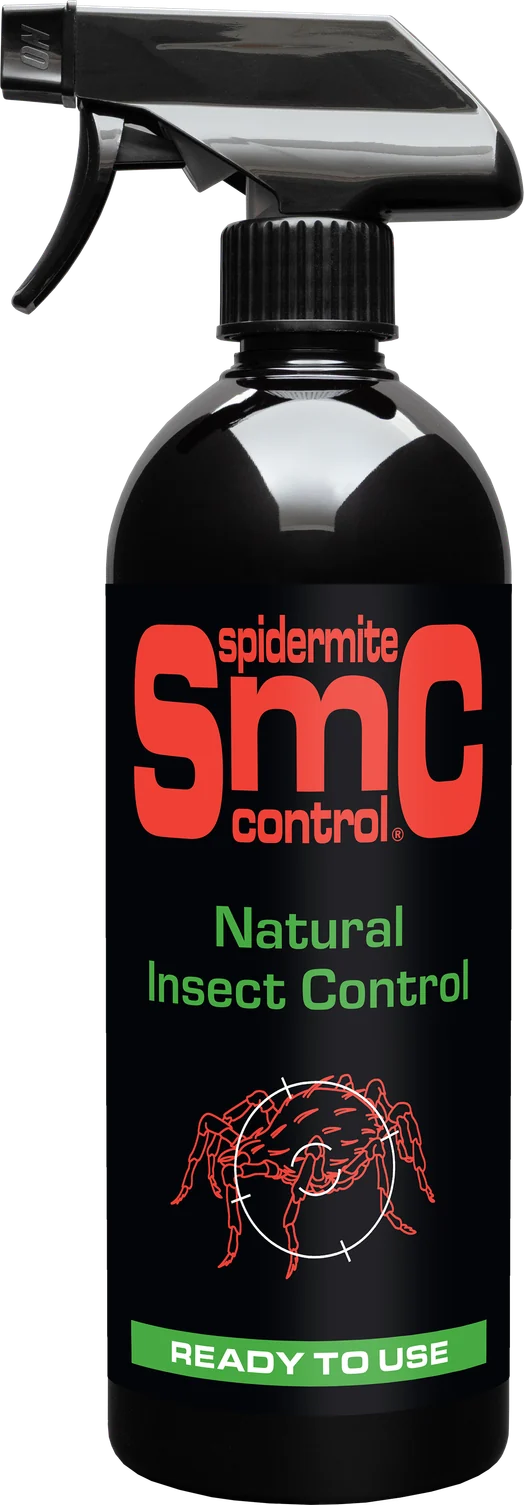
- Coats and suffocates whitefly
- Nothing for them to resist
- Safe around children, pets and bees
- No harvest interval
750ml Ready to Use. Ready to spray, straight onto the undersides of the leaves.
Buy on Amazon3. Check again after four days
Four days later, turn the leaves over again, lowest first. If you find live whitefly or young, spray again. Heavy infestations may need repeat sprays.
Whitefly resistance to chemical sprays
Whitefly quickly build up resistance to chemical sprays. In a 2010 study, researchers at Rothamsted Research tested greenhouse whitefly from the UK and Europe against several synthetic compounds, including some widely used against it, and found significant resistance in some populations.
SMC works physically, by suffocation, and whitefly can't build resistance to a physical action.
Greenhouse whitefly
In a greenhouse, the first thing you notice may be sticky leaves on the tomatoes, or black mould on the fruit. Glasshouse whitefly thrives in the warmth and is rarely a problem outdoors.
It feeds on tomatoes, cucumbers, melons, peppers and chillies, plus ornamentals such as fuchsias, pelargoniums and chrysanthemums. On tomato plants and peppers, start with the lower leaves and check every plant in the greenhouse.
There's no harvest interval, so you can pick tomatoes and peppers the day you spray them.
Greenhouse whitefly control through winter
Whitefly can hold out all winter in an unheated greenhouse if there's something to feed on. Clear out plants you don't need, give the greenhouse a clean in winter, and keep it well ventilated to slow sooty mould.
Whitefly on houseplants and in the grow room
Whitefly in the house never get a winter break. Poinsettias, fuchsias, pelargoniums and verbena are among the plants they feed on.
SMC is safe around children and pets, so there's no need to carry a plant outside to spray it. Try it on one leaf of a delicate plant first, and skip anything with hairy leaves.
In a grow room, turn the lamps off before you spray and wipe any residue off the bulbs before switching them back on. During flowering, spray the leaves and stems and keep it off the flowers.
Cabbage whitefly on brassicas
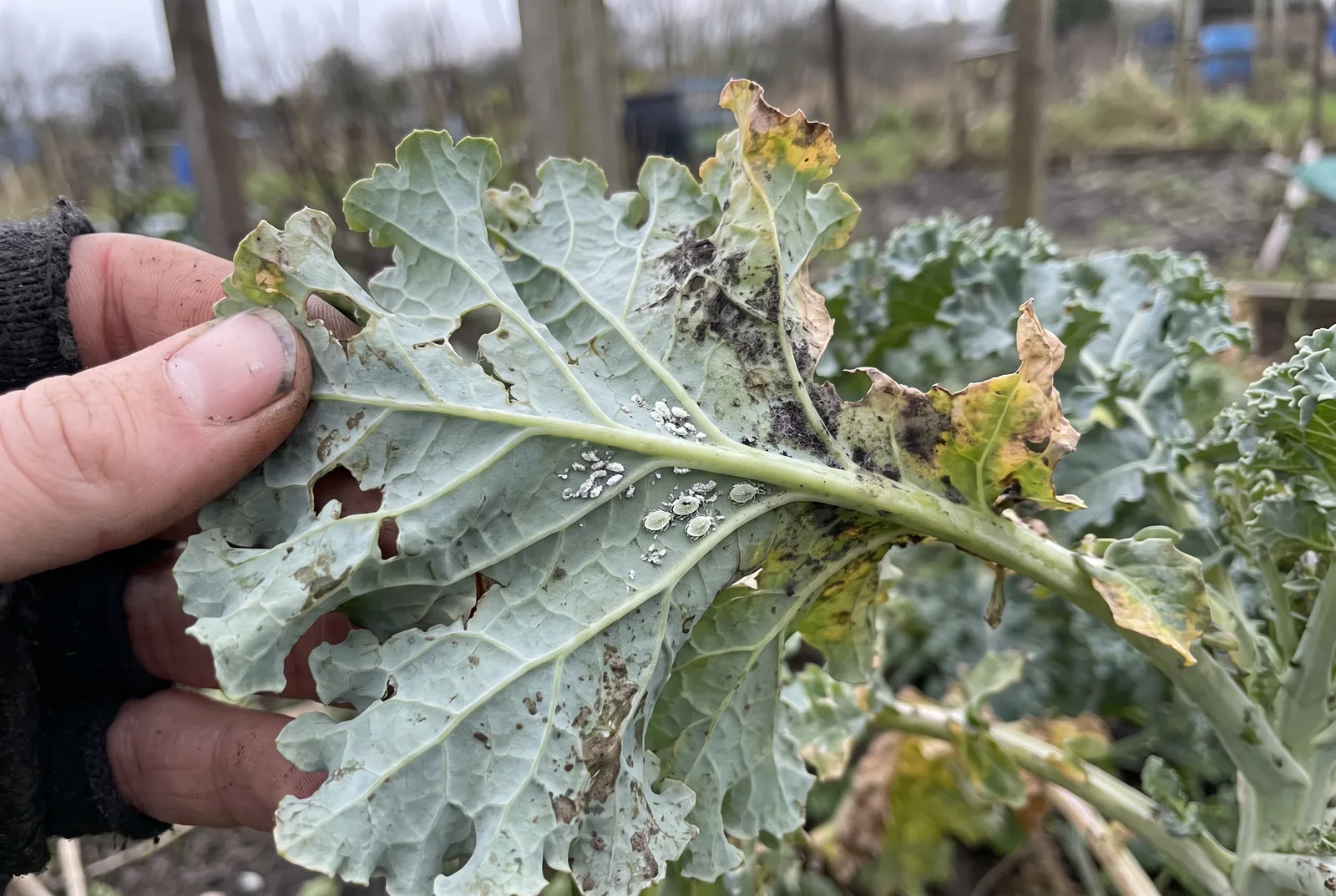
In the garden, the whitefly on your kale, cabbages and sprouts is cabbage whitefly. It sits on the undersides of the leaves, mostly the outer ones, and stays all year, spending the winter as adults.
Cabbage whitefly does most harm on kale, where you eat the young leaves, and sooty mould can be a problem on kale leaves and sprout buttons.
For cabbage whitefly control, spray the undersides of the outer leaves and anywhere you see them fly up. On an allotment, reinforcements can fly in from the next plot, so keep checking.
Whitefly on roses
If you've got small pale insects on your roses, take a closer look. Rose leafhoppers are pale yellow and 3.5 to 4mm long, more than twice the size of a whitefly, and they jump as well as fly when disturbed. Their creamy white young feed under the leaves, the tops of the leaves turn pale and mottled, and you may find their white cast skins on the leaves.
SMC covers both. To get rid of whitefly on roses, or leafhoppers, spray the undersides of the leaves and the stems, keep it off the flowers, and spray out of direct sun.
How to stop whitefly coming back
Whitefly often get in on a new plant, so the border check matters most.
- Turn the leaves of any new plant over, and if you can, keep it on its own for a while so any eggs have time to hatch and show.
- Spray the undersides with SMC once a week. It has no limit on use.
- Weekly spray, no limit on use
- 100% plant-based active ingredients
- Safe around children, pets and bees
- No harvest interval
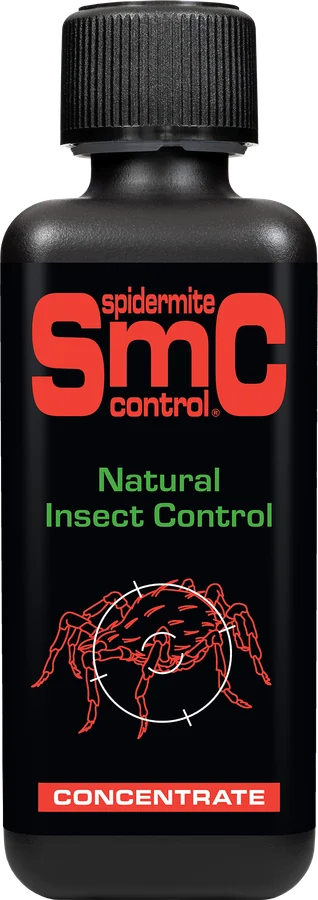
300ml Concentrate. One bottle makes 12 litres of spray.
Buy on AmazonWhitefly FAQs
Why am I getting whiteflies?
Warmth and a way in. Glasshouse whitefly often arrives on a new plant, then breeds all year in a warm greenhouse or house. Outdoors, cabbage whitefly spends the winter on brassicas and can move across from nearby plots.
What is the best thing to kill whiteflies?
A whitefly killer has to reach the undersides of the leaves, where the eggs and young are. SMC's oil film suffocates the adults and young, coats the eggs before they hatch, and gives whitefly nothing to build resistance to.
When should you spray for whitefly?
As soon as you spot them, in the afternoon or evening and never in direct sunlight. Check again after four days and spray again if you need to. To keep them off, spray weekly.
How long is the whitefly life cycle?
About three weeks from egg to adult at 21°C, and several months at 10°C. Each female can lay more than 200 eggs, so numbers climb fast in a warm greenhouse.
Does the same spray work on greenfly and whitefly?
Yes. SMC covers both, along with blackfly, spider mites, mealybugs and other soft-bodied pests. Here's how to get rid of greenfly.